Delivery Van Driving Jobs Philadelphia: How To Confirm A Listing Is Van-Based Before You Apply
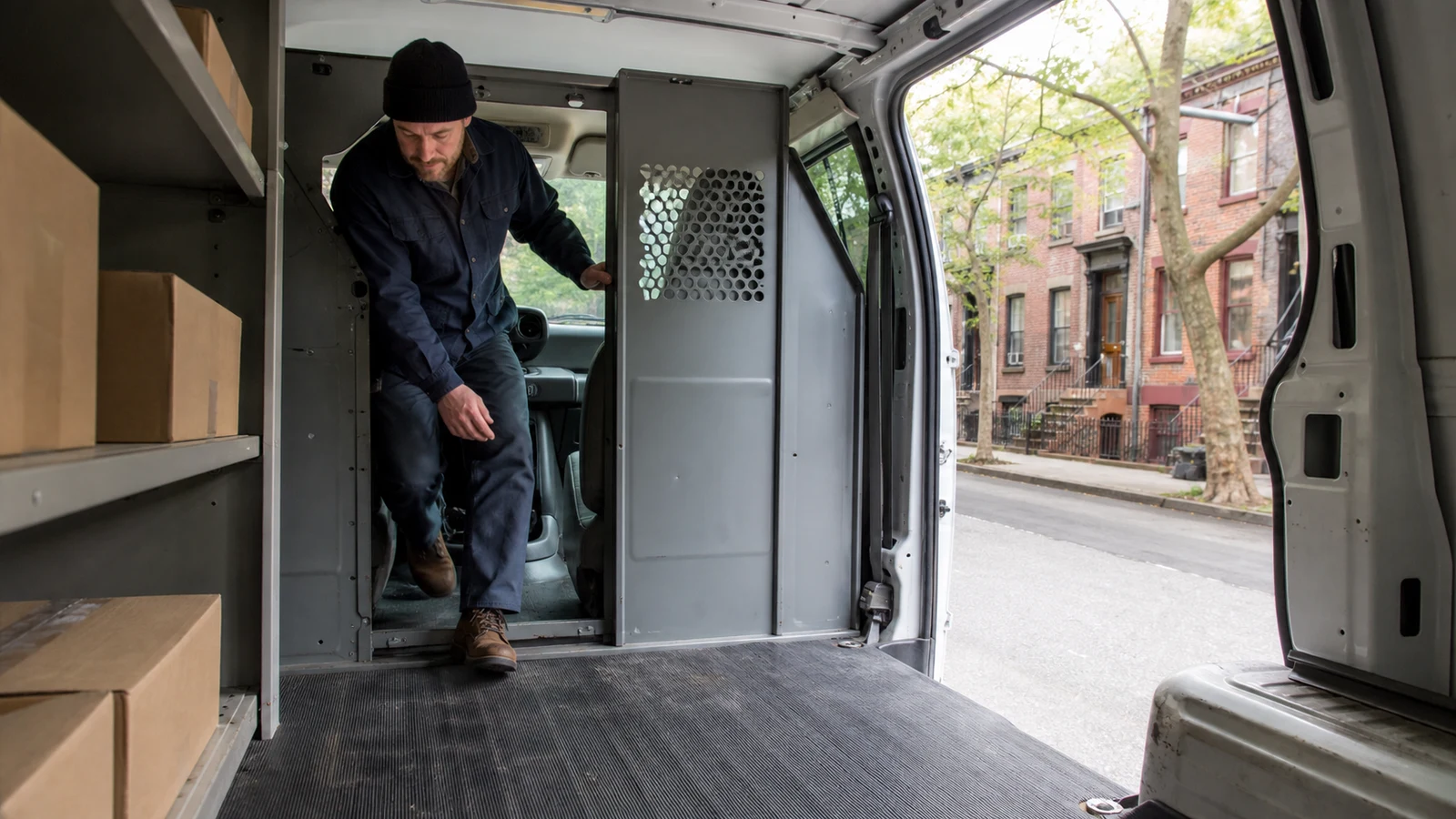
A job posting can describe an entire day of delivery work without ever telling you what you would actually be driving.
Delivery Van Driving Jobs Philadelphia: How To Confirm A Listing Is Van-Based Before You Apply
A job posting can describe an entire day of delivery work without ever telling you what you would actually be driving. That gap matters, because the vehicle decides almost everything else about the shift: how you load, how many stops you can carry, whether you need a commercial licence, and whether the vehicle is yours or the employer's problem. If you are searching for delivery van driving jobs Philadelphia employers are hiring for right now, the useful skill is not writing a better resume. It is reading a posting closely enough to decide whether it is van work at all.
Here is the short answer, before the detail. A listing only proves van work when three things appear in the posting itself: the vehicle class is named, the posting says who supplies that vehicle, and the duties describe things you can only do in a van. When any one of those is missing, the honest conclusion is not "probably a van" — it is "unresolved," and unresolved is a question for the recruiter rather than an assumption you carry into an interview.
What Separates Delivery Van Careers Philadelphia Listings From Car And Truck Roles
Most delivery postings in a metro market fall into four vehicle families, and they are rarely labelled clearly. There is personal-vehicle work, where you drive your own car or small SUV. There is cargo van work, usually an employer-supplied van with a cabin you can walk through or step into from the driver's seat. There is step van work, the taller walk-in body built for standing and moving between shelved parcels. And there is box truck or heavier freight work, which can cross into commercial licence territory depending on the vehicle's weight rating. Delivery van careers Philadelphia candidates are usually chasing the middle two, and those are exactly the two that generic posting language hides.
The blurring is not always deliberate. A single employer may run several vehicle types out of one facility and write one posting to cover all of them. Job boards also normalise titles, so a specific role becomes a plain "Delivery Driver" listing by the time you see it. The result is a posting that reads as though the vehicle question has been answered when it has not. Reading it as an unanswered question is more accurate, and if you are still sorting out how delivery driver vehicle types differ from one another, that comparison is worth having in your head before you start scanning listings.
Reading The Vehicle Line In Company Van Delivery Work Philadelphia Postings
Vehicle information tends to hide in four places, and they do not agree with each other as often as you would hope. The job title sometimes carries it ("Cargo Van Driver"), which is the cleanest case. The responsibilities section may describe loading or cabin movement that implies a class. The requirements section may mention licence type, insurance, or vehicle condition, which usually signals personal-vehicle work. And the benefits or compensation section may quietly mention mileage reimbursement or a fuel card, which points in opposite directions depending on which one appears.
Read all four before deciding. A posting whose title says nothing but whose duties describe loading a shelved cargo area from a facility dock is telling you more than the title did. A posting that names a van in the title but asks for proof of personal auto insurance in the requirements is contradicting itself, and that contradiction is the single most useful thing you can bring to a recruiter conversation.
Three Posting Signals That Confirm Company Van Delivery Work Philadelphia
The three confirming signals are narrow on purpose. Each one alone can be explained away; together they are hard to misread.
- A named vehicle class. The posting says cargo van, step van, walk-in van, or a specific van model or size. "Vehicle provided" is not a class. "Fleet" is not a class.
- A stated supplier. The posting says the vehicle is company-provided, employer-supplied, assigned at the station, or picked up and returned at a facility. This is the line that separates van work from personal-car work more reliably than any other sentence in the listing.
- Van-specific duty language. Duties that only make sense inside a van body: moving between the cab and the cargo area without stepping outside, a roll-up rear door, a bulkhead, fixed cargo shelving, or loading a full day's parcels at a facility rather than picking up single orders.
When all three appear, you can treat the listing as confirmed van work and spend your application time on it. When two appear, you are close but not finished. One signal alone is a hint, nothing more.
Duty Language That Points To Delivery Van Careers Philadelphia
Duty language is the signal most people skip, and it is often the most honest part of a posting because it was written by someone describing real work rather than marketing a role. Phrases about standing to sort parcels, walking through the cabin, securing loads against a bulkhead, or scanning packages from shelving describe a van interior. Phrases about carrying one or two orders at a time, waiting at a pickup point, or completing trips between customers describe a car. Neither phrasing is a guarantee, but they rarely appear in the wrong kind of posting by accident.
Weight and lift language is a weaker signal than it looks. Lifting requirements appear across every vehicle class, so a stated lift figure tells you about the parcels, not the vehicle. Treat it as context rather than evidence.
Wording That Does Not Prove Company Van Delivery Work Philadelphia
Several common phrases feel like vehicle information and are not. "Reliable transportation required" almost always means you are supplying the vehicle, or at minimum getting yourself to a site — it is not a promise of an assigned van. "Valid driver's licence required" appears in essentially every driving posting and distinguishes nothing. "Fleet available" is ambiguous by construction: a fleet can exist at a company without every role drawing from it. And mileage reimbursement is close to a negative signal, because employers generally reimburse mileage on vehicles the driver owns, not on vehicles they supply and fuel themselves.
Also treat photographs and header images as decoration. A posting illustrated with a van tells you what the employer's brand looks like, not what you would be assigned. The same applies to a company's general description of its operations; a business that runs vans somewhere is not the same as this specific requisition assigning you one. That distinction is worth holding onto alongside the wider picture of company vehicle driving jobs and what an employer-supplied vehicle actually commits you to, since the supplier question shapes fuel, maintenance, insurance, and personal-use expectations well beyond the first day.
Sorting Delivery Van Careers Philadelphia Listings Into Three Groups
Rather than judging each listing as good or bad, sort them into three piles. It is faster and it tells you exactly what to do next.
- Confirmed. Example: a posting reading "company-provided cargo van, walk-through cabin, roll-up rear door, non-CDL." Class named, supplier stated, van-only feature described. Apply.
- Ambiguous. Example: "drivers operate company vehicles from our local facility," with no class named anywhere in the listing. The supplier signal is present, the class signal is missing. Do not discard it — ask.
- Disqualified as van work. Example: "delivery driver, reliable transportation required, mileage reimbursed." Two independent signals point to a personal car. It may still be a decent job; it is not the job you were searching for.
The ambiguous pile is where the real gain sits. Most candidates either apply blindly to it or skip it entirely, and both choices waste the listing. A short, specific question usually resolves it in one exchange.
Questions That Resolve Ambiguous Company Van Delivery Work Philadelphia Listings
Keep the questions narrow enough that a recruiter can answer them from the requisition without checking with anyone. Four cover most cases.
- Which vehicle class is assigned to this specific role at this site — cargo van, step van, box truck, or personal vehicle?
- Is the vehicle supplied by the employer for every shift, or is there a mix of assigned vehicles and personal-vehicle routes on this team?
- Does this role require a commercial driver's licence, or is it a non-CDL vehicle?
- Where does the vehicle start and end each shift — a facility, a lot, or somewhere the driver arranges?
Asking these is not pushy. It is the same information the employer will eventually have to tell you, moved earlier so neither side spends time on a mismatch. If a recruiter cannot answer question one, that is itself informative — it usually means the requisition covers several vehicle types and assignment happens later, which is worth knowing before you accept anything.
What Van Assignment Changes For Delivery Van Careers Philadelphia Applicants
Licence expectations are the first practical difference. Federal and state rules tie commercial driver's licence requirements to vehicle weight ratings and configuration rather than to the word "van," so a heavier van-bodied vehicle can sit in different territory than a standard cargo van. Confirm the requirement against the posting and, if you are unsure, against your state licensing agency's published thresholds rather than against forum advice.
Parking, loading, and vehicle handling are the second. A van is taller and longer than a car, needs somewhere legal to stop while you deliver, and is generally backed and manoeuvred more than a car is. Ask how routes handle stopping and loading in the areas you would cover, what happens when a stop has no accessible space, and whether the employer provides training on the specific vehicle. Conditions vary by employer and by route, so take the answers from the people running the operation rather than assuming a citywide norm.
The third difference is the vehicle itself. Before a start date, it is reasonable to ask whether you are assigned one vehicle or draw from a pool, how maintenance and breakdowns are handled mid-route, what the fuel arrangement is, and whether any personal use is permitted. None of these are unusual questions, and the answers tell you a lot about how the operation is run.
Turning A Confirmed Listing Into A Delivery Van Careers Philadelphia Application
Once a posting is in the confirmed pile, the application itself gets simpler, because you can write to what the role actually is. Reference van handling, facility loading, and route-based parcel work directly instead of describing generic driving experience. If your background is personal-vehicle delivery, say so plainly and describe what transfers — route sequencing, customer handoffs, scanning discipline — rather than implying van hours you do not have. Employers verify driving history, so accuracy costs you nothing and protects you later.
There is no single correct choice between van work and car work. Van roles typically remove vehicle cost and wear from your side of the ledger while adding size, handling, and facility-schedule constraints. Personal-vehicle roles usually offer more flexibility and less vehicle training while leaving fuel, maintenance, and depreciation with you. What matters is that you choose deliberately, from a posting you have actually decoded, instead of discovering the arrangement in week two. That is the whole point of testing a listing before applying to delivery van driving jobs Philadelphia employers post under vague titles.
If you want to keep building on this before your next application, the full library of Philadelphia delivery driver career guides covers requirements, applications, interviews, and schedules alongside vehicle questions. When you are ready to move from research to applying, review the current openings and requirements published on the EPIQ Logistics careers page, check the vehicle language in each listing using the three signals above, and bring your remaining questions to the conversation. A candidate who already knows what they are looking at tends to have a much shorter, clearer hiring process — which is the practical reward for reading delivery van driving jobs Philadelphia postings carefully in the first place. Work you understand before you accept it, whether that turns out to be company van delivery work Philadelphia or something else entirely, is nearly always the better start.