Check CDL conviction notice in Philadelphia delivery jobs after a traffic disposition
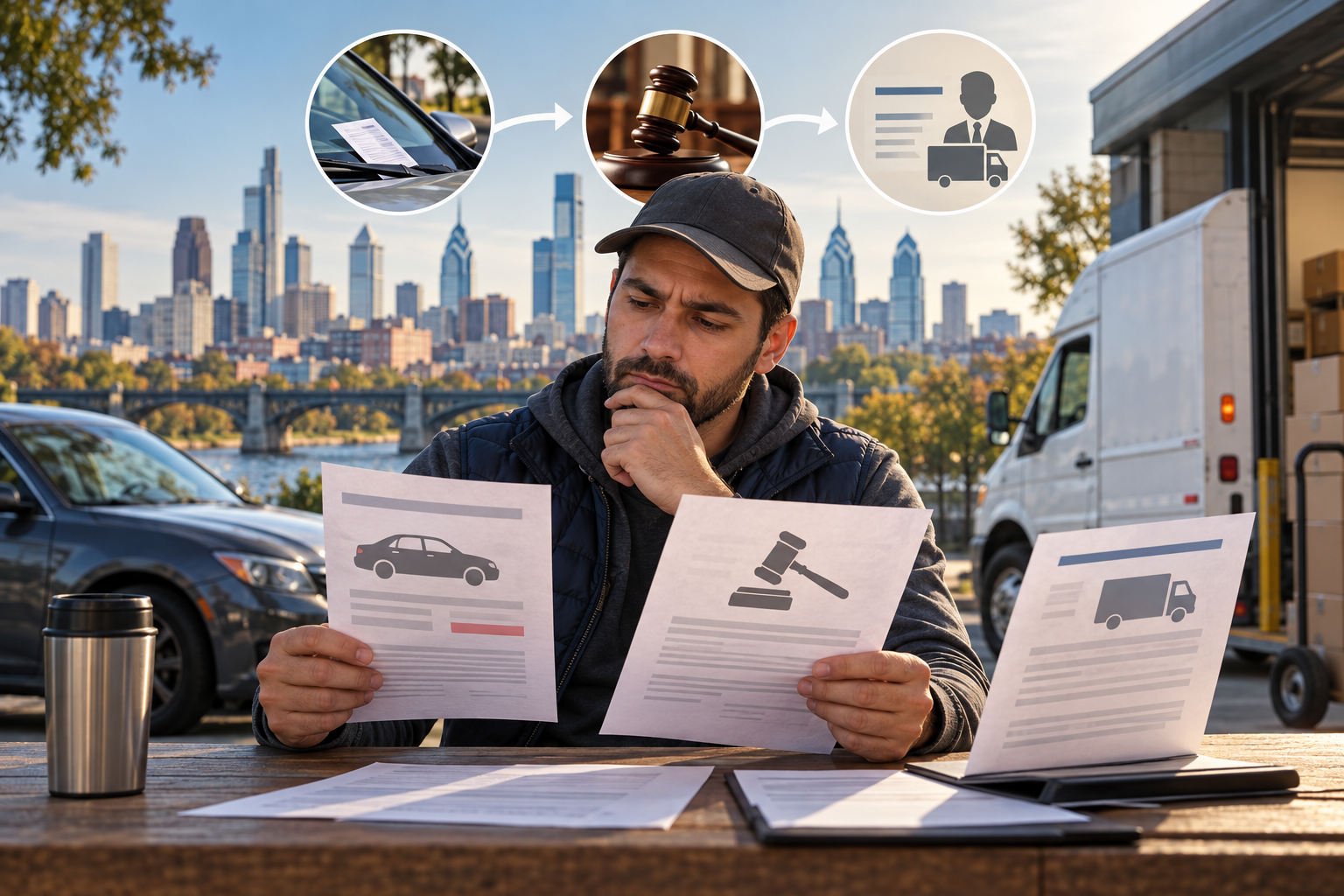
Distinguish a citation from a conviction and check the written employer-notice requirement for a covered CDL driver, including personal-vehicle events.
If you operate a commercial motor vehicle with a CDL, CDL conviction notice in Philadelphia delivery jobs requires attention to the actual disposition and the employer-notice rule that applies.
Under 49 CFR 383.31, a person operating a commercial motor vehicle with a state- or jurisdiction-issued CDL must notify their current employer of a conviction for a state or local motor-vehicle traffic-control violation, other than a parking violation. The rule includes convictions arising in any type of motor vehicle, so a personal-car event is not automatically outside it.
Send a traffic conviction employer notification
The specified employer notification is due within 30 days after conviction. Do not substitute the date you received a ticket or the date you later noticed an entry on a driving record. Establish what actually happened and retain the relevant document.
Imagine a fictional covered CDL driver who receives a traffic citation while using a personal car. A later court disposition records a conviction. The driver should preserve both events separately when identifying the conviction date and the notice question.
This example does not determine whether an actual citation resulted in a conviction, how a particular disposition is classified or whether a driver is disqualified. If the event’s status is unclear, obtain individual guidance rather than labeling it from memory.
Do not treat a personal vehicle as an automatic exception
Check both the vehicle involved in the event and the person’s CDL/commercial-operation status. The rule covers convictions from any type of vehicle once its conditions apply.
This article does not establish a universal notice duty for every Philadelphia delivery worker. A non-CDL position, an employer policy and another applicable law may raise different questions. Confirm the actual requirement rather than extending this provision to everyone with a driver’s license.
Prepare the specified written notification
The regulation requires writing and lists the information to include: the driver’s name and license number, conviction date, offense and resulting specified driving-privilege action, whether a commercial motor vehicle was involved, the offense location and the driver’s signature.
Use an appropriate employer contact and retain your own notification record. This guide does not collect license numbers, court documents or personal traffic histories. Nor does it supply a substitute employer form or decide whether a particular submission satisfies the rule.
Keep related questions on their own track
You may need to review the actual driving-record entry. Correcting an inaccurate record is a separate task from identifying a current-employer notification requirement. Do not assume that one process automatically completes the other.
Also clarify vehicle-use and cost policies when a work vehicle is involved. Who pays a fine or handles an insurance issue does not, by itself, answer this conviction-notice question.
The Philadelphia delivery-job guides cover other role requirements. For this issue, retain the actual disposition, the applicable notice requirement and what you sent. Leave any licensing consequence, appeal or disputed legal classification for assessment under its own rules.