Compare business vs residential delivery jobs in Philadelphia
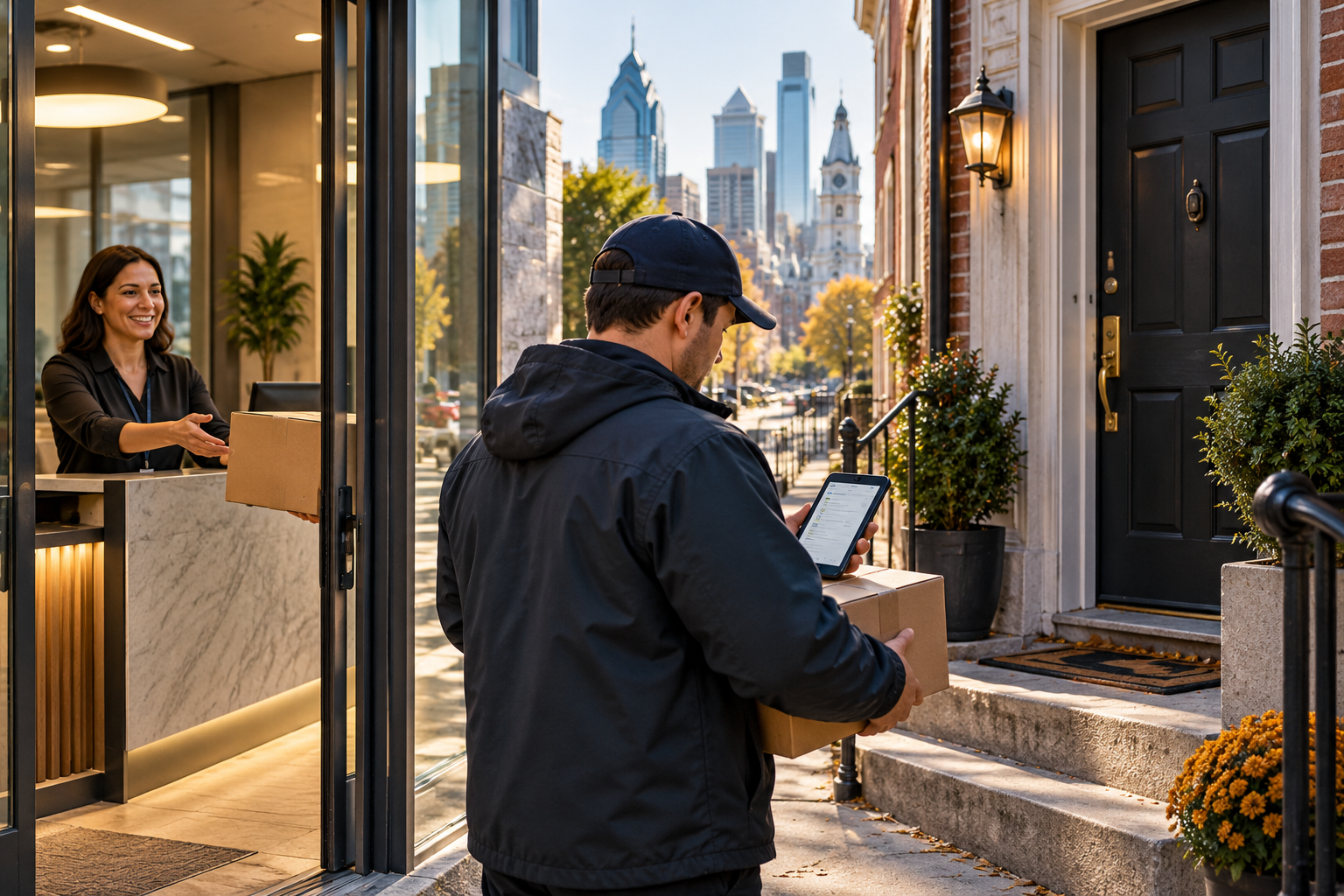
Compare the actual recipient, access and exception instructions behind business and residential delivery roles without inferring workload from the address label.
When comparing business vs residential delivery jobs in Philadelphia, look beyond the address label. Ask what completes a stop: who receives the item, which instructions authorize the handoff and what happens when the expected recipient is unavailable. Those answers give you a more useful comparison than assuming that one kind of address makes a route easier.
The Bureau of Labor Statistics' delivery-driver profile describes merchandise deliveries to businesses and households. That occupational description does not establish an EPIQ stop mix, route schedule or delivery policy. Confirm those details for the opening you are considering.
Clarify the business delivery handoff
First establish whether the work ends with the intended recipient or transfers goods to another facility in the delivery network. A business address can describe a customer receiving an order or a facility receiving goods for another transport stage. Ask what happens there instead of classifying the work from the building name.
The Philadelphia delivery driver career guides cover the broader search. If the network stage is still unclear, use the guide to distinguishing final-mile deliveries from facility transfers before comparing customer handoffs.
Once both roles are confirmed as deliveries to end recipients, compare their actual completion instructions. This article concerns that handoff comparison, rather than vehicle type, territory size or the number of stops.
Ask who can receive the order
Read the duty description for any stated recipient or access requirement. If a role involves business customers, ask whether delivery is to a named receiving person, a counter or another authorized point. If it involves households, ask which recipient and delivery-location instructions the driver is expected to follow.
Keep these as questions until you have the employer's answer. A receptionist is not automatically an authorized recipient for every order. A household address does not by itself authorize leaving an item unattended. The relevant instruction comes from the employer's process for that work.
For your comparison notes, separate the customer contact from the place where the item is handed over. “Contact the receiving desk” and “leave the item at the receiving desk” describe different actions. Ask what the driver is expected to do when the contact and handoff instructions differ.
Compare access and time constraints without inventing a route pattern
Ask whether the role has stated customer delivery windows, access arrangements or appointment requirements. Record how those instructions are provided and who handles an exception. Do not infer a standard daytime schedule from business customers or an evening schedule from residential ones.
Also ask what the employer means by a stop. If an address contains several recipients or orders, determine which tasks the job description assigns to the driver. You do not need a general rule about office buildings or apartment buildings; you need the definition used for the actual route.
Keep travel geography in a separate part of your assessment. The guide to confirming a Philadelphia delivery territory addresses the service area and reporting location. A handoff arrangement that suits you does not settle whether that geography fits your needs.
Work through two fictional handoff descriptions
Suppose two hypothetical roles both describe deliveries to end recipients in the same Philadelphia area. The first says a receiving employee signs for each business order during a stated appointment window. The second says household orders must be handed to the named recipient, with the driver contacting dispatch when that person is unavailable. These are invented terms for comparison, not EPIQ policies or typical route specifications.
The address labels alone do not identify which role you would prefer. Compare the actions each description actually assigns:
| Question | Fictional business role | Fictional residential role |
|---|---|---|
| Who completes the handoff? | A receiving employee signs. | The named household recipient accepts. |
| What timing is stated? | An appointment window. | No window specified in this example. |
| What remains to ask? | What to do if the receiving employee is unavailable. | What dispatch directs when contact fails. |
The first description leaves an exception procedure unanswered. The second identifies an escalation contact but still leaves the eventual outcome unspecified. Neither blank should be filled by assuming that a driver can leave an item, choose another recipient or change the delivery time independently.
Choose the interaction you are willing to perform
Consider the work that the confirmed instructions require. Are you comfortable asking for the authorized receiving contact, documenting the required handoff and reporting an unresolved stop? Which parts would you want explained or demonstrated during training?
Ask the same questions of both opportunities. Avoid rating a role on a customer category while using actual duties to judge the other. If one employer supplies a clear procedure and the other has not answered, record that information difference without turning it into a claim about all business or residential work.
Your comparison should end with the handoff responsibility you understand and the questions still open. Use those findings to choose the next application or clarification. They do not establish pay, workload, safety training or the availability of a current opening.